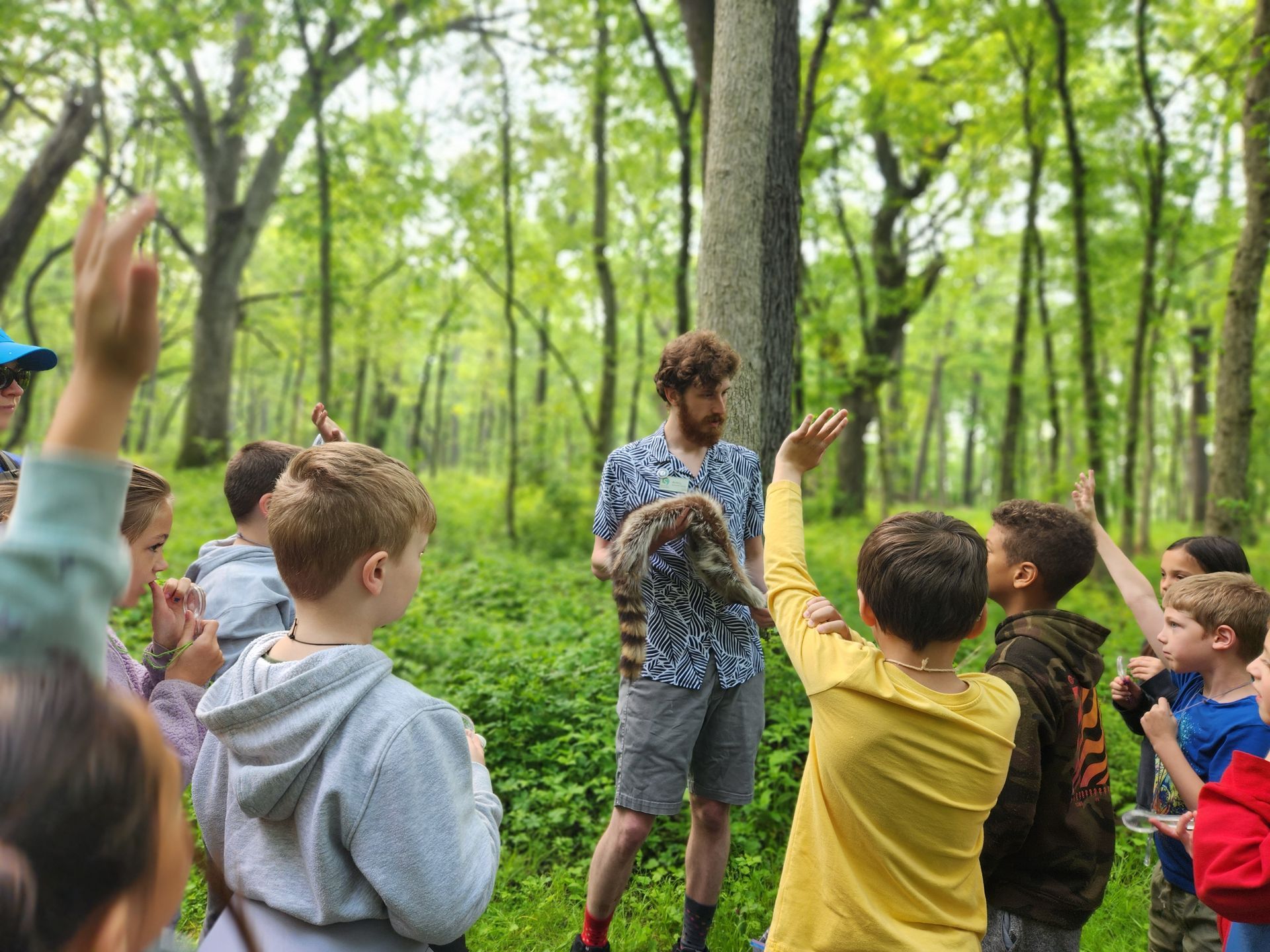
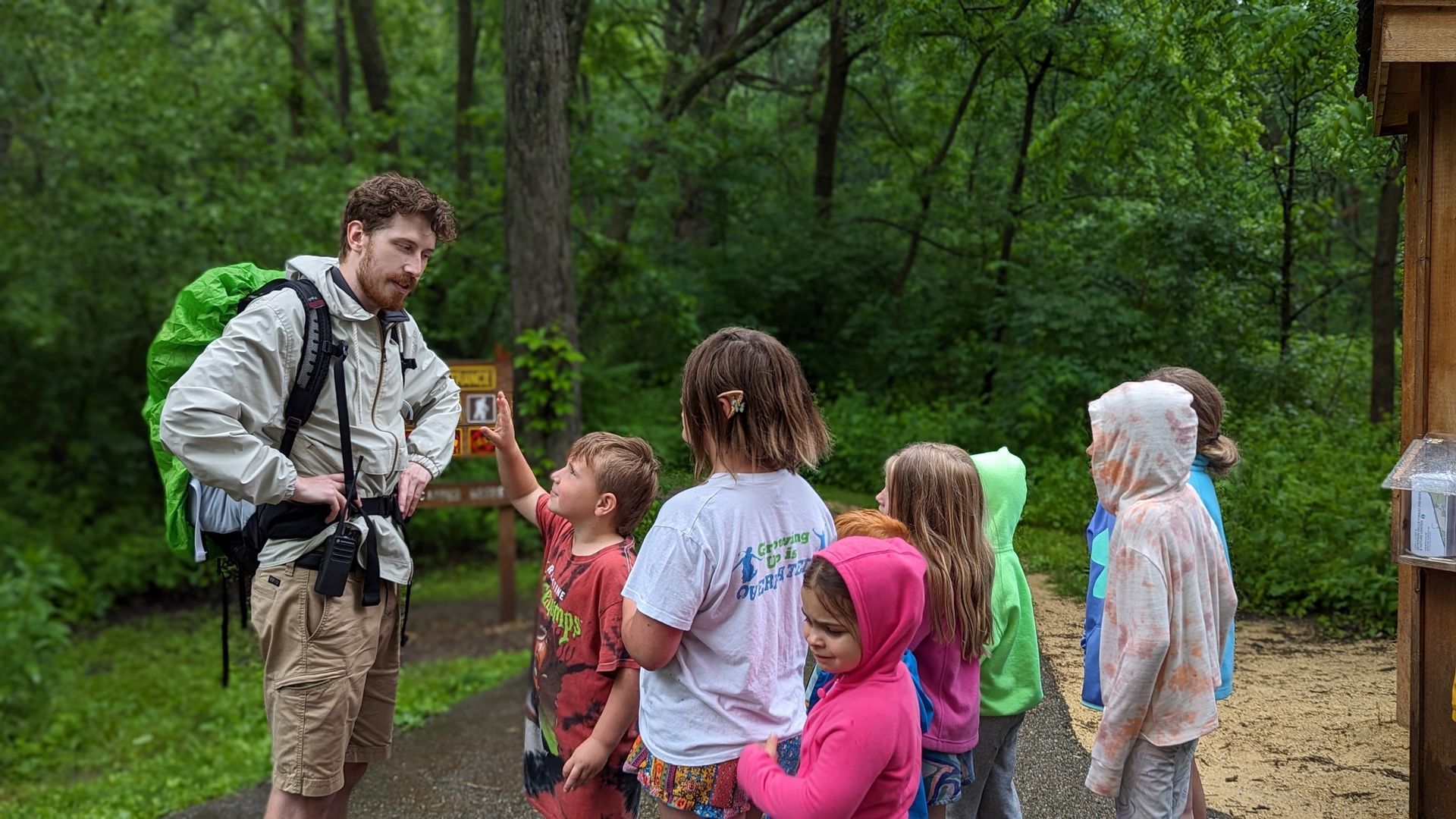
My adventures at Severson are coming to a close, and I will only have fond memories looking back at this place and all the great people I was able to spend my days with. Through the Americorps program I was able to educate the community on all things natural and having the opportunity to teach kids directly about all kinds of wonders the world has to offer. I cannot tell you the happiness I feel when I tell a kid a fun fact about the world and seeing their face light up with joy. The whole world is new to them and I was given the opportunity to teach about everything and anything I can. I plan to take all of what I learned from this job and apply it to everything I do in the future no matter what my future has in store for me.
FIELD NOTES BLOG
Alex's Farewell
Alex Lunde
September 18, 2024
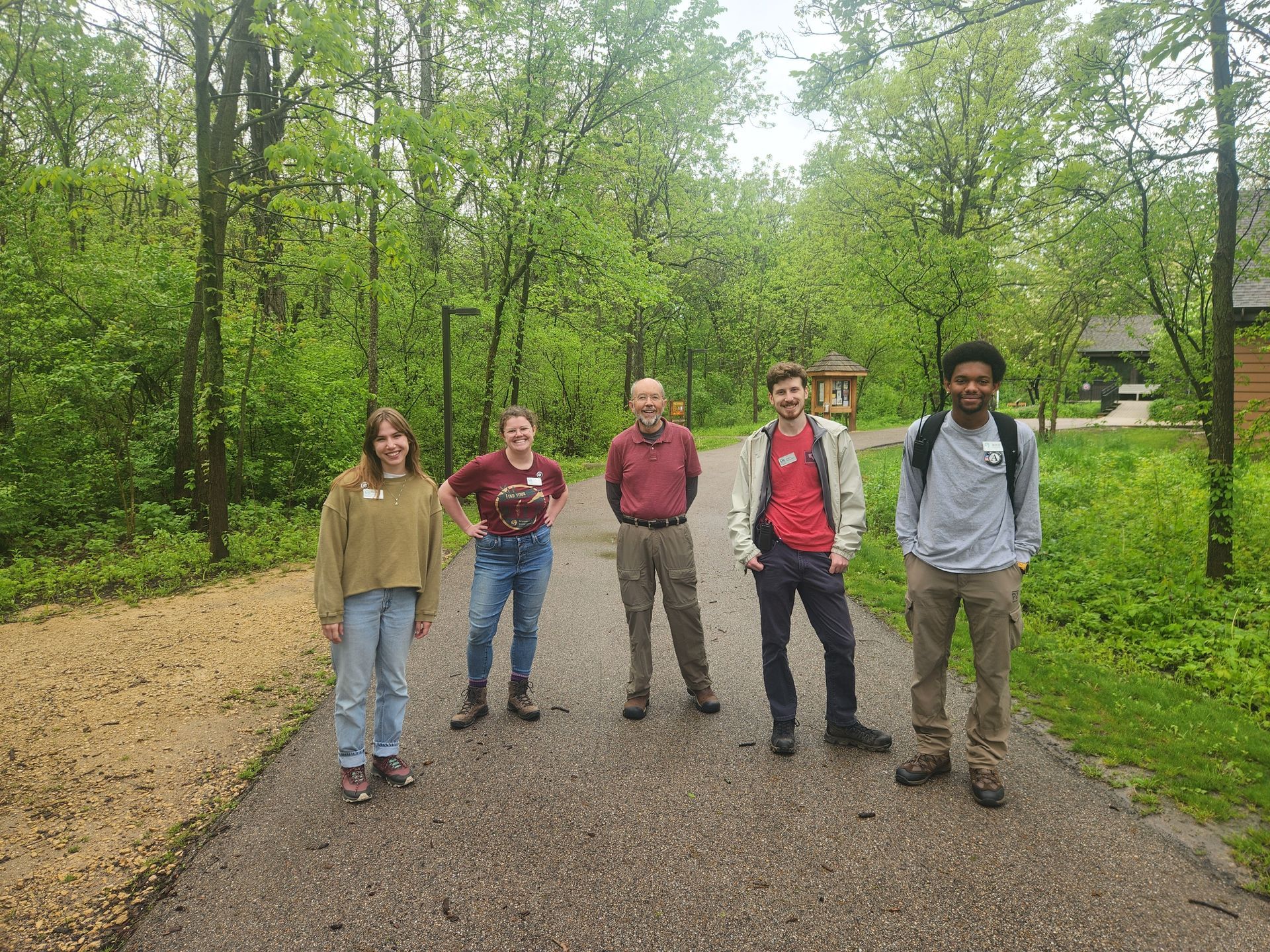
.Teaching other people wasn’t the only opportunity I got to do at Severson. Some of the best things about working at Severson Dells Nature Center is the opportunity to experience and learn new things for myself. Our little community fosters the ability to continue to learn and grow from each other. I learned about so many specific fields and expanded my knowledge because of it. Even though everyone at Severson knew the Americorps positions are a temporary internship they still put so much effort into improving what I know and introducing things I don’t know. All because of the compassion they hold for me and the scientific world at large. They showed me not just through their words but through their actions, the importance of teaching anyone who wants to learn.
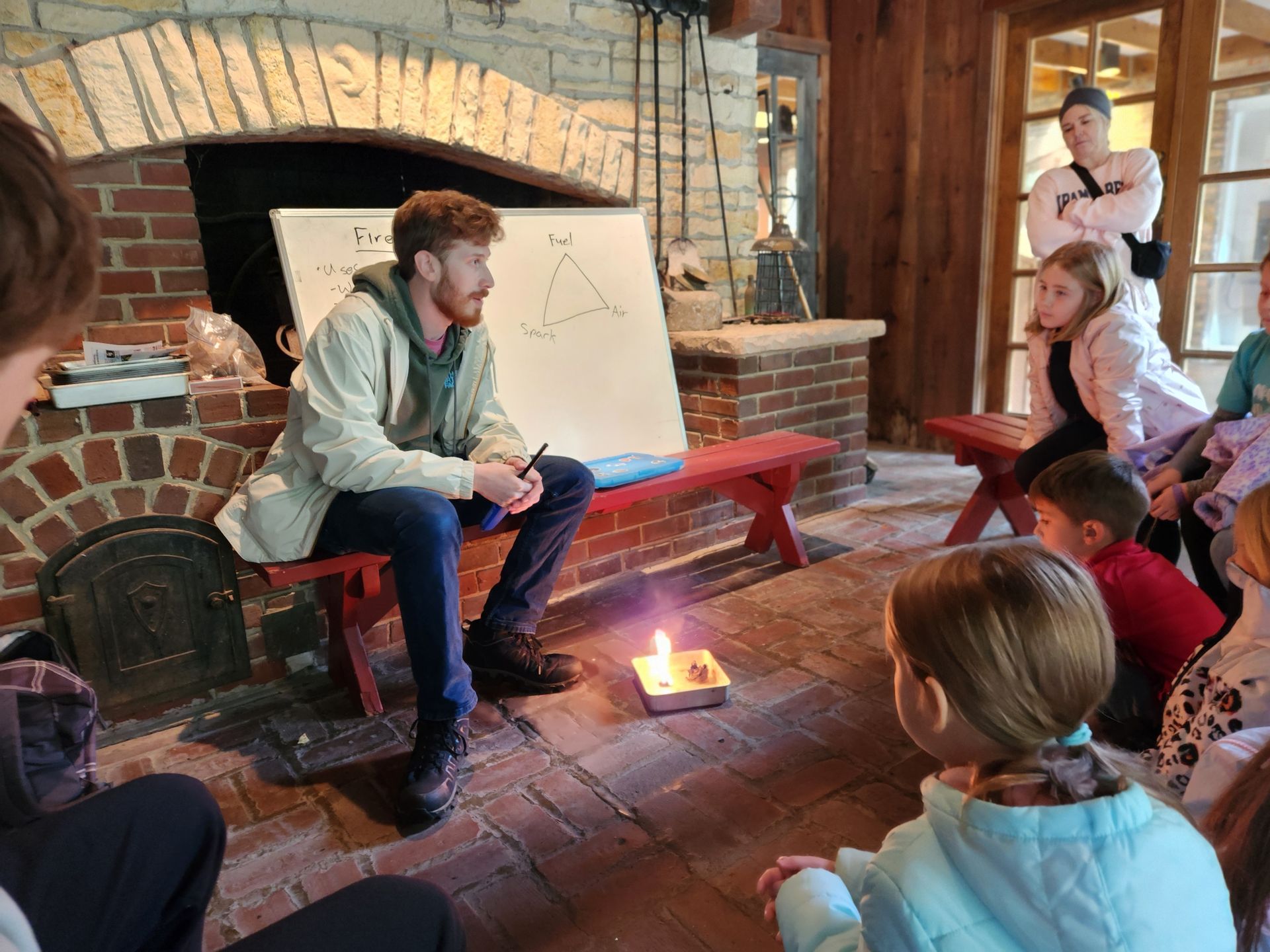
Closing this out I just want to say thank you to all my wonderful friends at Severson Dells. Every single one of them put so much effort into making the best environment for learning (for guests and Americorps like me). No matter where I go in the future I will remember them all fondly.
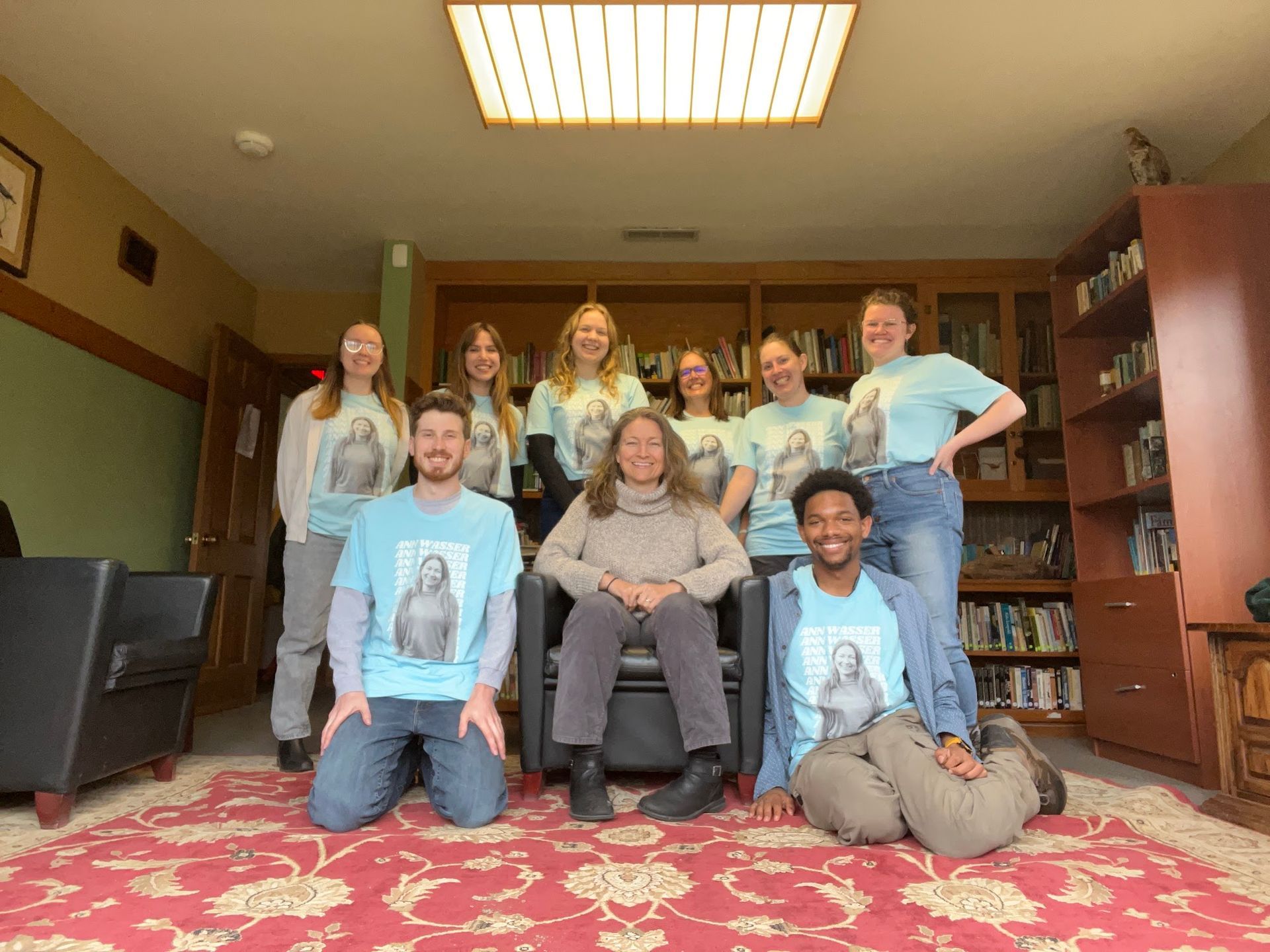
Thank you Andrea, Liz, Ann, Laura, Becca, Bryce, Emma, Elly, Jillian, Asia, Connie, Mary, Alex, Holly and Mason. Each and everyone of you made Severson the wonderful place that it is. Keep being amazing!
I want to close out this final blog with a quote from Thomas Fuller “If thou hast knowledge, let others light their candle at thine.”
Knowledge is like a candle, lighting another candle doesn’t diminish the first one but spreads the heat and light to reach farther. Everyone at Severson had their own candles of knowledge that they happily shared with me out of kindness and I appreciate them all greatly for it. Thank you to everyone at Severson for sharing your knowledge with me. I hope to light up every future place I go to with my own candle.
Thanks you all truly from the bottom of my heart, I couldn't have asked for a more wonderful group of people to spend my time with!

RECENT ARTICLES
There is no better way to spend your summer than outside! Whether you're hiking through the woods or simply enjoying a walk with friends, spending time outdoors has countless benefits. At Severson Dells, our hiking trails and Nature Playscape are always free and open to the public. But if you're looking for a new way to experience nature, why not turn your next outdoor adventure into a game? Gamification is the process of adding elements of games, such as challenges, competition, and rewards, to everyday activities. Gamifying the outdoors can make spending time outside more engaging, especially for families, kids, and between friends. Here are a few ways to gamify your next outdoor adventure.
The ocean, and all of the water in it, is constantly in motion. Though it may sometimes appear calm on the surface, enormous currents continuously move ocean water around the globe like a giant conveyor belt. These currents regulate weather, move nutrients across ecosystems, and shape the climates of entire continents. Currents on the surface of the ocean are controlled by the wind, but deeper in the ocean currents are controlled by water density in a process known as thermohaline circulation . Thermohaline refers to the temperature (thermo) and salinity, or saltiness, (haline) of the water. Circulation refers to how the water moves throughout the ocean from pole to pole. Though this is a complicated sounding word, the process is actually pretty simple. Here’s how it works: As ocean water travels toward the poles it becomes colder, and when it gets cold enough, it eventually begins to freeze and forms into sea ice. What is important about this process is that when seawater freezes, the salt is left behind in the surrounding water. As a result, the surrounding water becomes saltier, colder, and in turn becomes more dense than the water around it. Eventually, this water becomes dense enough to sink deep into the ocean, and warmer surface water moves in to replace it. This process of freezing, melting, and replacement continues on and on, resulting in a continuous cycle of moving water that forms deep ocean currents, often referred to as the “global ocean conveyor belt.”
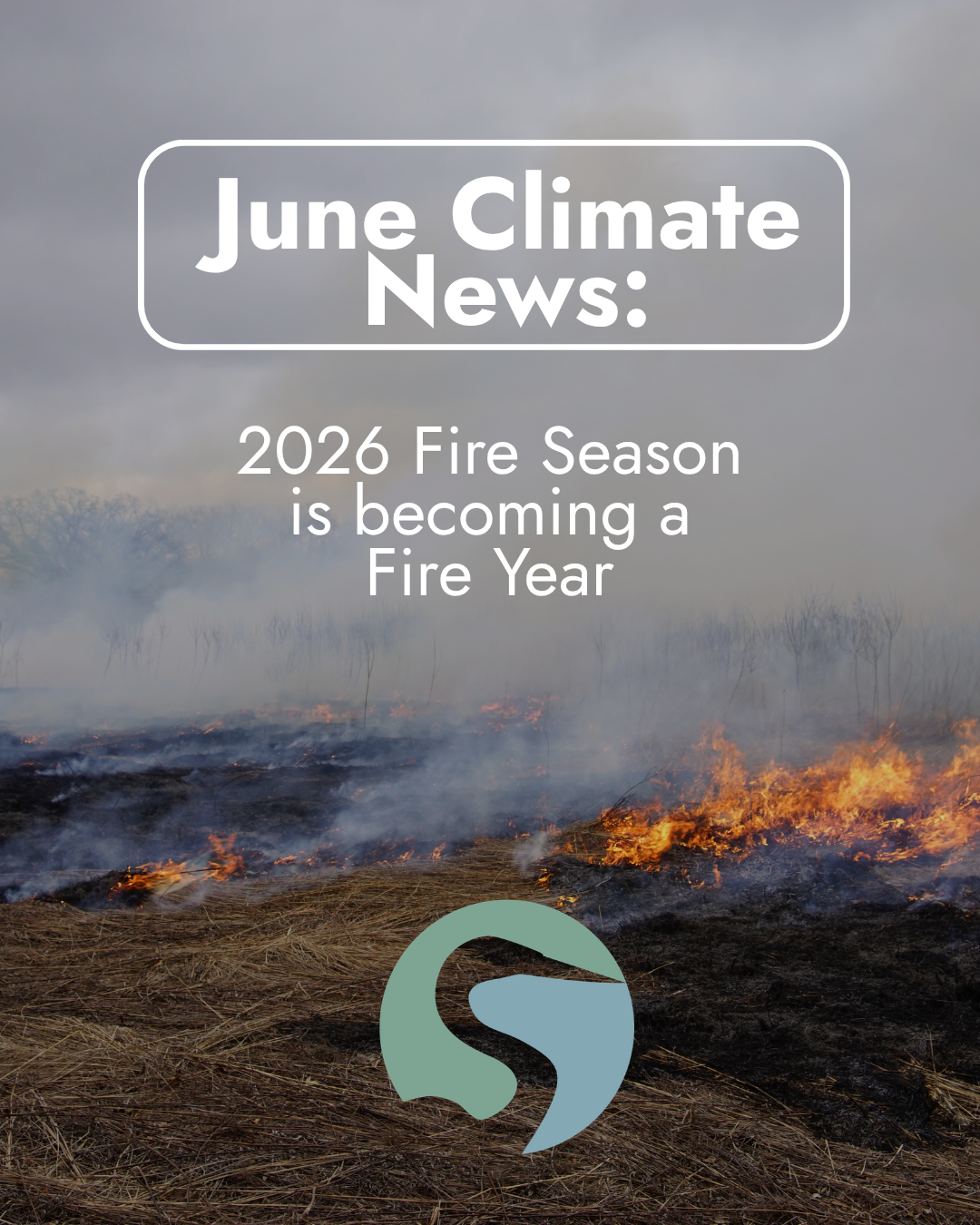
Experts are warning that 2026 may bring a record wildfire season to the United States, so severe that many researchers and fire agencies are no longer calling it a “fire season” at all. We are off to such a start that experts are now referring to it as a fire year. Traditionally, the wildfire season in the United States peaks between May and October, but we have seen many fires throughout the southern and western United States already this spring. Most major fires occur in western states. However, impacts from wildfires can be felt across the entire country, including here in northern Illinois. Wildfire smoke can travel hundreds or even thousands of miles, affecting our air quality here in Rockford. Maybe you recall the hazy skies and dangerous air quality alerts from the last few summers caused by fires burning far away in Canada. Unfortunately, these days are not going away, and if anything, we should expect more of them in the future. So why is this year a “fire year”, and why are experts concerned? Let’s dig into it.